Assess marketing opportunities
About the Unit
Identify your marketing opportunities.
Learn to set clear objectives and define your target market through extensive research and analysis techniques.
Start with the Study guide BSBMKG431.
What are the Market Research Basics?
Learning Outcomes
BSBMKG431- Assess marketing opportunities
- Identify, research and evaluate marketing opportunities.
- Collect, organise and interpret research information.
- Define best practice techniques for Marketing.
- Understand the Marketing mix and how to use it.
- Recognise marketing communication concepts & processes.

Click on Tabs for Learning Content
Marketing Opportunities
Marketing opportunities are those methods used to reach potential new and existing customers and promote your brand.
These can be found by:
- analysing your competitors
- examining online analytics
- generating leads by holding give aways and contests
- using social media, digital marketing and advertising to connect with customers.
- powering loyalty programs and offers
- retargeting consistently and tailoring the right content to the right prospect.
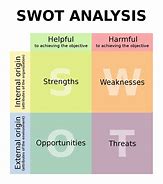
The SWOT analysis will help business identify new market and new product opportunities.

Marketing Legislation
➡Review Question 1
Marketing can help your business reach its target audience, attract new customers and ultimately increase your profit.
When marketing your business, products or services, make sure you’re aware of any regulations or legal requirements.
Product Safety Rules and Regulations
➡Review Question 2
Click on the links below to research any product safety rules and regulations that may affect your business.
Meeting your legal obligations when marketing your business.
➡Review Question 3
When advertising or promoting your business there are many laws, rules and regulations you need to consider. These could include Privacy laws, Trademark laws, Australian Consumer Law and SPAM regulations.
For example, Australian Consumer Law states that:
- businesses need to be honest in their dealings
- a business must be able to prove any claim they make or advertise
- claims should be true, accurate and based on reasonable grounds
- online product and service reviews should be independent and genuine
- special rules apply to cash back promotions, prizes and discount vouchers
Processes and Procedures to remain compliant.
➡Review Question 3
To ensure you do not put your company at risk of litigation, you will need to design and implement some policies and procedures.
For example:
under the SPAM Act 2003 it is illegal to send unsolicited commercial electronic messages without consent.
Your business would need to put a system or process in place that ensures any direct marketing emails have been approved by the client. You may have them tick a box on your website, or sign a document agreeing to you sending them marketing material. This “procedure” is written proof that you have shown due diligence and taken reasonable care to obey the laws.
Training and Communication:
- You would also need to ensure these procedures have been communicated with any staff and a training record kept as proof.
- You will need to monitor that procedures are being followed by using an audit checklist.
- Any breaches of procedures will need to be followed up and an action plan implemented.
- All of these documents will need to be filed and will provide evidence if you were ever to be challenged or audited.
Organisational Structure
➡Review Knowledge Question 10
Communication of compliance
An organisational structure outlines how activities are directed to achieve the goals of an organisation. It will indicate the chain of command and depending on the size and type of business it can be functional, divisional, flatarchy or matrix .
In businesses that have many staff, communication is key to ensuring that compliance is met. Clear responsibilities and communication channels are required. An organisational chart is a tool that will help communicate this. It is a diagram that clearly indicates the hierarchy and who is responsible for what and the channels that should be followed when communicating.
Example of an Organisational chart.
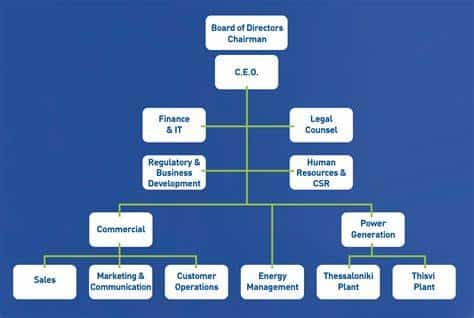
The green lines indicate who communicates with whom. The structure indicates the hierarchy with the CEO at the top and the operational team at the bottom. Each department is responsible for their department and they communicate only with the person that the green line indicates.
This diagram shows that the Sales team communicate with the Commercial Manager and the Commercial Manager then communicates with the CEO.
Market Research is the process of compiling data to help you better understand the market you want to operate in.
This can be achieved by generating an economic profile for your geographic target area.
- Who is your potential customer?
- Where do they shop?
- When do they shop?
- How and why do they shop?
- How much disposable income do they have?
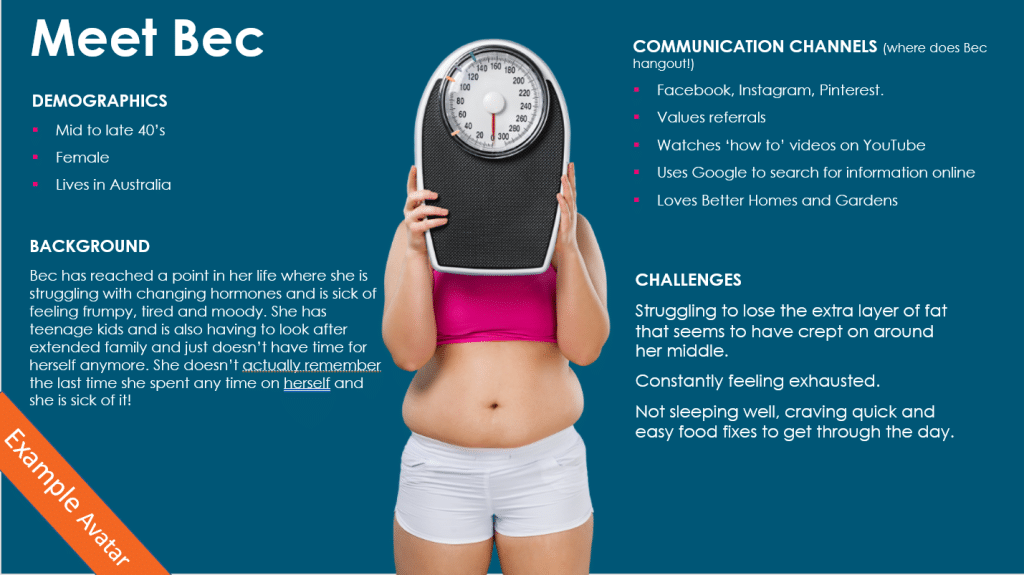
A Customer Avatar/Buyer Persona example
A buyer persona or avatar can help you understand your customer better. Allowing you to market your business where they are looking and really connect to solving their problems.
Remember- we sell benefits not features. Market research is all about understanding your customers and what makes them buy.
Methods used to conduct Market Research
➡Review Knowledge Question 4&5
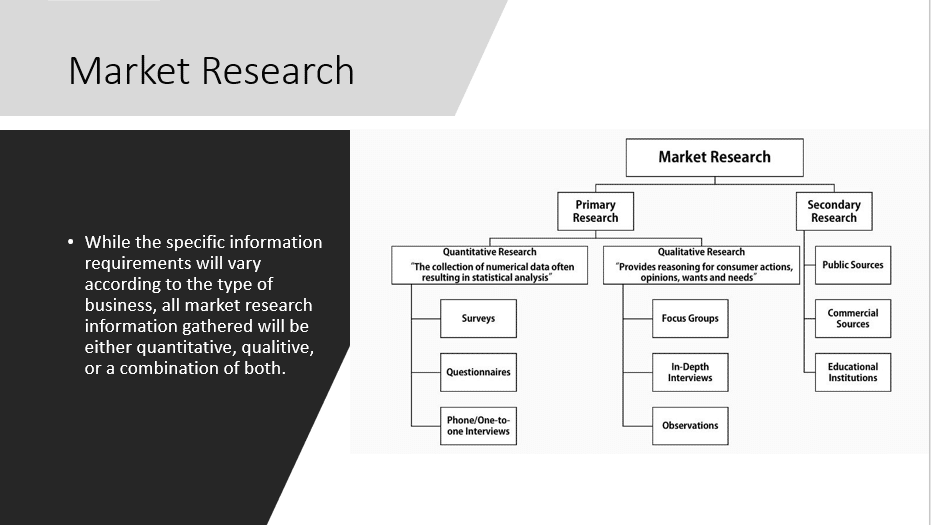
This diagram explains the methods used to collect data for market research. Most market research will involve a combination of primary and secondary resources. You will also want to find out hard facts (quantitative) and the soft facts (qualitative).
The methods you use to gather the data may include surveys, observation or internet searches.
The techniques you use to analyse this data may be that you collate all survey responses into a table or graph that summarises the overall opinions of your market. This table gives you a clear indication of your results and helps you establish your findings and recommendations.
The 4P’s of the Marketing Mix
➡Review Knowledge Question 8
The Marketing Mix refers to the 4 elements of
- Product
- Price
- Placement
- Promotion
These work together to generate sales and grow a business. When drafting a Marketing Plan all 4 areas need to be considered.
The link below explains the Marketing mix in more detail.
This video explains the Marketing Mix and how all 4 components work together
Market Segmentation
Is the process of breaking down a large consumer market into smaller segments based on common characteristics. It aims to identify the most profitable segments with growth potential that the business can then focus its marketing efforts on to achieve business objectives.
Gathering data for Market segmentation
➡Review Knowledge Question 9
Market segmentation can be split into 4 areas-
- Demographic- age, gender, income etc.
- Geographic- local, international, online.
- Psychographic- values and beliefs.
- Behavioural- how, when and why they buy.
When collecting data on these four segments, the Australian Bureau of Statistics is a reliable and current source of information.
Information can be found about the population and also the current state of the economy. This can indicate consumer confidence and allow you to identify any possible external risks that may affect your business growth.
The Consumer Price Index (CPI) indicates price changes and inflation. If inflation rises, disposable income reduces and customers will have less money to spend on luxury wants.
The Average weekly earnings- will indicate how much money the average person is earning. If compared to the past figures it will indicate how the economy is tracking and how much they have to spend.
The Unemployment rate can influence several parts of the business. If more people are working, there is more money in the economy to be spent, more taxes are being paid and consumer confidence is high. However, if you are hiring staff, it could be harder for you to find staff and you may need to pay them more because supply of labour is hard to find. Vice versa if unemployment rates are high. There will be less money for customers to spend, which may affect your sales.
Gross Domestic Product (GDP) provides an economic snapshot used to estimate the strength of an economy. A good GDP will instill confidence in consumers as it means we are producing enough goods and services to indicate a thriving economy. The downflow through the economy will mean more disposable income to spend.
Market Positioning
After segmenting the market and determining your target customer, your aim is to design an image or brand that differentiates itself from your competitors.
It also relates to how customers perceive or connect with your brand.
Niche market specialised focused and targeted market. Focusing on your unique selling point can mean better conversion rates, higher margins as well as customer loyalty.
Some tools to help you identify your strengths and opportunities, you could conduct a SWOT analysis, a Competitor Analysis and also do a market map.
Sampling in Market Research
In statistical language, sampling is choosing a subset of the population to gain insight into the whole population. The chosen sample needs to represent the cross section of features and characteristics of the whole population from which it is chosen.
When segmenting the market you may group it into geographic, demographic, behavioural and psychographic.
Market sampling is taking opinions from a small section of the whole population.
The Marketing Plan
➡Review Question 7
Developing an effective marketing strategy is crucial for any business that wants to be successful. Having a marketing plan helps you set clear goals, deliver your message more effectively, save on resources and measure your impact of the activities.
The 5 Basic Elements of a Marketing Plan are:
- Market Research
- Target Market
- Goals
- Marketing Strategy
- Budget
“Best Practices” in Marketing
➡Review Knowledge Question 6
A best practice is a method or technique that has generally been accepted as the superior way of producing better results.
Marketing best practices are designed to provide business growth whilst promoting long-term authentic relationships with your customers.
The ever-changing world of technology and customer needs means that best practices are always changing. It is important that you stay up to date with current trends.
5 examples of Marketing Best practice in 2023 have been described as:
- know your brand identity
- know your target audience
- set clear and attainable goals
- let data analytics drive your creative
- educate customers with content marketing
- prioritise Search Engine optimisation
- develop your website.
Assessment 2, Task 1- Identify Opportunities
What is a Marketing Opportunity?
- An opportunity is any idea that has commercial potential.
- It is a consumer need or want that can potentially be met by a business.
- We solve problems for consumers. These problems are opportunities to fill a gap in the market.
- Market research identifies these needs and wants and provide marketers with the ability to identify opportunities to make money.
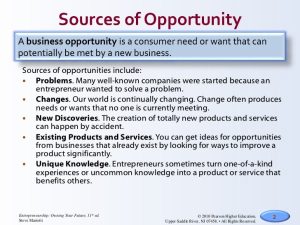
Sources of Opportunity
Hover Box Element
How to identify marketing opportunities.
- Direct/Indirect Competitor Analysis– conduct a SWOT analysis of your competitors. Compare your product to theirs, what advantage does your business have over theirs? Which brands are growing the most? Which products in your industry are getting the most attention? What are the areas of improvement that you could capitalise on?
- Purchasing Analysis– How do consumers pay for their purchases? Where do they make their purchases? When do they buy? Are they receiving their products/services at the right time? Is there an opportunity here for you?
- Consumer Environment analysis– refer to your PESTLE analysis. Are there any technological changes or government regulations that could change and be advantageous to your business?
- Complimentary market analysis– who can you team up with for a win/ win business venture? If you sell soap, is there a pottery maker who makes soap dishes? Monitor these markets to gain insight into any new product opportunities.
- Consumer analysis– gain regular customer feedback find out what motivates them, why they buy your product. Keep statistics on the gender, age, time they buy, average spend, the top 10 selling products. Analyse these regularly and identify opportunities around your findings.
Example:
Lash Studio
3 Opportunities identified:
- Complimentary- identified a local beautician looking for someone to provide lash extensions for wedding clients
- Direct Competitor Analysis- using out of date techniques and products, opportunity for my new lash techniques.
- Purchasing analysis – clients prefer to come after work or on weekends.
***Please use these identified opportunities for Task 4***
What is a Marketing Objective?
What are the specific and realistic outcomes your company wants to achieve with its marketing activities over a certain period of time?
Follow the SMART acronym to write clear and achievable objectives.
➡Review Task 2a
Marketing goals and marketing objectives are two different things.
- Marketing goals are the big picture, long-term aspirations to be achieved in the next few years.
- Marketing objectives are the more specific, measurable methods used by the marketing team to achieve the big goal. They use language like statistics and time to be measured.
Objectives are a substantial part of any Marketing plan and when written need to be SMART.
Specific: It helps you specify the objectives with detailed information. You must remember these 5 W one H i.e. what, who, where, when, why, and how.
-> Measurable: If we are not able to measure an objective, then it becomes impracticable to know if you have reached it. So, defining a set of KPIs will help you define success in your scenario.
-> Achievable: Goals that are too easy or too ambitious to achieve.
-> Realistic: Taking the previous resources and achievements into account.
-> Timely: Specifying the deadline of your goal and check whether they have been fulfilled or not if not then why. It is very useful when you are defining a global goal into smaller objectives, or need to correct any course as we move forward.
7 examples of Marketing Objectives
- Increase brand awareness measured by the before and after of the campaign going live.
- Increase market share based on your competition.
- Improve return on investment based on analytics
- Increase company profit by ?%
- Attract ? new customers a month by ? date.
- Retain ? new customers a month.
- Increase sales to $? by ? date.
*** Provide SMART marketing objectives for Task 2***
SMART – this video explains what this stands for. Goals in business are the big picture and objectives are the steps you take to get there that need to be SMART.
Who is your Target Market?
When defining your target market, you need to write a couple of paragraphs that outline who your target clients are and what problems you can solve for them.
Here are a few questions to start with:
- What gender are they?
- What age group?
- Is where they live important?
- What languages do they speak?
- How educated are they?
- How do they prefer to buy?
- How much money do they earn?
- What hobbies do they have?
- What problems do they have?
- What websites do they visit?
- What is their lifestyle?
➡Review Task 2b
***Give a comprehensive description of your target market based on research of demographic, geographic, psychographic and behavioural traits of your proposed customer****
Watch this video on how to find your target market
Market Segments
Market Segmentation allows businesses to target the people most likely to be satisfied with their product or service.
There are 4 types of segmentation:
- Demographic
- Geographic
- Behavioural
- Psychographic
Watch this video
Have you watched the video? Now let’s put it into practice!
Task 3 Market Segmentation, Targeting and Positioning
Task3a-
What are your Market segments?
Type of Segmentation- Demographic, Geographic, Psychographic, Behavioural.
You can focus on one segment or a combination of segments depending on your product or service.
Market Segmentation/ customer groups- what customer groups have you identified within the segment?
Task 3b
Relevant Market Factors
You need to consider the following market factors when establishing your Marketing Strategy.
- What are your marketing objectives
- What are your target market segments?
- What is your unique selling point (market positioning)?
- Consider the 4 or 7 P’s of Marketing
***Complete the table below to help you with this task and the next task***
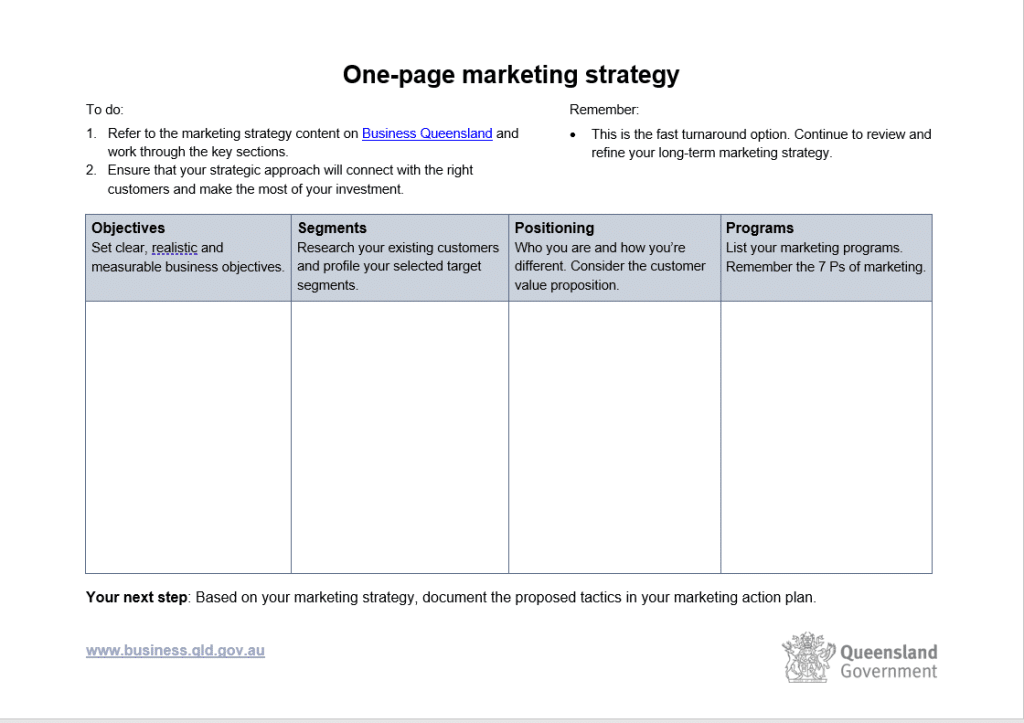
For example:
Product: Lash Extensions
Customer group identified through research is:
Demographic- Females aged between 18-34 years old.
Geographic – prefer to use a local provider
Behavioural- every 4-6 weeks return sales
Psychographic- can be customised to suit individuals needs
Priority % –
In this scenario- you might choose to focus your marketing efforts mainly on women aged between 18-34 (40%) and in your local area up to 10kms (40%). Behavioural (10%) designing a loyalty program, Psychographic (10%) advertising new custom products
***Consider your priorities for your next stage- the Marketing Strategy***
Example of Marketing strategy using the table and scenario:
Marketing objective- To gain an average of 5 new clients a week for lash extensions for the month of …..
Segments- Females 19-34, within 10kms of store.
Positioning- New natural non-allergenic product that can be adapted to individual needs
Programs- Introductory price if you sign up/ recommend a friend and get your next session % off.
Click on the link below to learn more.
Task 3c –
Review and provide a summary of the tactics you will use
***Summarise the completed marketing strategy above in Task 3c.***
Example:
Market segments – I will choose to prioritise females aged 19-34 located within 10kms of my location (review market segments and priorities from 3a).
The factors to consider are (refer to 3b)…..
I will direct my marketing message towards local women using my Facebook page and local flyers. The message will focus on my new innovative methods and my unique operating hours of 11am -7pm so they can visit after work. (refer to Marketing strategy-“Programs” column) This supports my identified opportunities and marketing objectives.
Task 4a- Continues on from Task 1
Evaluating your Marketing Opportunities
Example from Scenario:
Marketing Opportunity: Clients prefer after work appointments.
Marketing Objective: To increase clientele appointments by at least 5 a week after 5pm from 1st of Feb,2024.
***Remember- when writing objectives, they need to be SMART. (Specific, Measurable, Achievable, Relevant and Timely)***
Task 4c-
Presented Findings and Recommendations
Pretend you are presenting your findings to a Manager for approval.
Example from Scenario:
Market research has identified that the Target market is……………………………………… . Based on this information, I have decided to prioritise our marketing segments by focusing mainly on ……………………………….
The opportunities I have identified are . ……………………….
I believe these marketing strategies meet our business objectives by …………………………………. and positively impact our future sales turnover and customer satisfaction.
Document 4- Assessment 3-
Business Plan Instructions
- Write your full name on the top of the first page “Participant name:”
- Attach a completed copy of your Operational Plan to be marked.
- Attach the completed parts of your Financial Plan that are requested.
Check off the Assessment Submission Checklist
This will ensure you have completed all tasks and paperwork correctly and we won’t need to return anything before marking.
News feed